

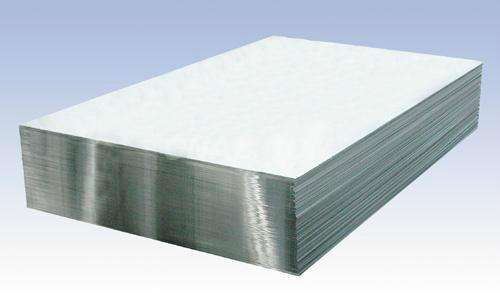
5083 H116 marine grade aluminium sheet stands as the definitive material for saltwater structural applications, combining the highest strength-to-weight ratio among non-heat-treatable alloys with exceptional corrosion resistance and cryogenic toughness.
This Al-Mg-Mn-Cr alloy delivers 305–385 MPa ultimate tensile strength while maintaining weldability and guaranteed immunity to intergranular corrosion through proprietary stabilization heat treatment.
The H116 temper specifically addresses the sensitization vulnerability inherent in high-magnesium aluminium alloys, controlling β-phase (Al₈Mg₅) precipitation to discrete, non-continuous morphologies that eliminate galvanic corrosion cells.
Consequently, 5083 H116 achieves over 10,000 hours exposure in ASTM G85 salt spray without pitting, serves in LNG containment systems at -162°C without embrittlement, and carries classification society certifications from Lloyd’s Register, DNV GL, ABS, and Bureau Veritas for hull construction, superstructures, and pressure vessels.

5083 H116 Marine Grade Aluminium Sheet
2. Properties of 5083 h116 marine grade aluminium sheet
Chemical Composition and Metallurgical Design
| Element | Specification (wt%) | Functional Role |
| Aluminium (Al) | Balance (≥94.0%) | Base matrix; corrosion resistance |
| Magnesium (Mg) | 4.0–4.9 | Primary strengthening; solid solution hardening |
| Manganese (Mn) | 0.40–1.0 | Grain refinement; Al₆(Mn,Fe) dispersoid formation |
| Chromium (Cr) | 0.05–0.25 | Recrystallization control; grain boundary stabilization |
| Iron (Fe) | ≤0.40 | Controlled impurity; Al₃Fe phase limitation |
| Silicon (Si) | ≤0.40 | Controlled impurity; Mg₂Si prevention |
| Zinc (Zn) | ≤0.25 | Limitation; galvanic corrosion prevention |
| Titanium (Ti) | 0.05–0.15 | Grain refinement in casting |
Mechanical Properties
Tensile and Yield Characteristics (ASTM B928)
| Property | 5083-H116 | 5083-O | 5083-H321 |
| Ultimate Tensile Strength (MPa) | 305–385 | 270–345 | 305–385 |
| Yield Strength 0.2% (MPa) | 215–305 | 115–200 | 215–305 |
| Elongation (%) | 10–16 | 16–22 | 10–16 |
| Elastic Modulus (GPa) | 70.3 | 70.3 | 70.3 |
Fracture and Fatigue Performance
| Property | Value | Test Method |
| Plane Strain Fracture Toughness (K_IC) | 35–45 MPa√m | ASTM E399 |
| Fatigue Strength (10⁷ cycles, R=0.1) | 110–130 MPa (smooth) | ASTM E466 |
| Fatigue Strength (welded) | 70–90 MPa | ASTM E466 |
| Charpy V-Notch (longitudinal) | 25–35 J | ASTM E23 |
Cryogenic Properties
Unlike ferrous materials, 5083 H116 Marine Grade Aluminium Sheet shows no ductile-to-brittle transition. At -196°C (liquid nitrogen temperature):
- Tensile strength increases 15–20% versus room temperature
- Elongation remains >15%
- Fracture toughness increases 20–30%
These characteristics enable LNG containment membrane systems operating at -162°C, where material failure risks catastrophic cargo release.

Bending Test of 5083 H116 Aluminium Sheet
Physical and Thermal Properties
| Property | Value | Application Impact |
| Density | 2.66 g/cm³ | 66% lighter than steel; critical for stability |
| Melting Range | 574–638°C | Welding parameter selection |
| Thermal Conductivity | 120 W/(m·K) at 20°C | Heat dissipation in engine compartments |
| Coefficient of Thermal Expansion | 23.8×10⁻⁶/°C | Design allowance: 2.4 mm/m for 100°C ΔT |
| Electrical Conductivity | 29% IACS | Cathodic protection current distribution |
| Specific Heat | 900 J/(kg·K) | Thermal mass calculations |
3. Manufacturing of 5083 h116 marine grade aluminium sheet
Casting and Direct Chill Processing
Manufacturing 5083 aluminum sheet begins with vertical direct chill (DC) casting of 400–600 mm thick ingots. Critical process parameters include:
Grain Refinement: Titanium diboride (TiB₂) inoculation at 0.01–0.05% Ti and 0.005–0.01% B achieves ASTM 2–4 as-cast grain size (180–360 μm), preventing cast grain coarseness that would persist through subsequent thermomechanical processing.
Cooling Control: Water flow rates of 2.0–3.5 m³/min per meter of periphery extract heat at 100–200°C/min, preventing magnesium macrosegregation that would create property variations across final plate thickness.
Hydrogen Management: Degassing reduces hydrogen content to <0.15 ml/100g Al, eliminating porosity that nucleates corrosion and reduces fatigue strength.
Thermomechanical Processing
Hot Rolling: Breakdown rolling at 400–500°C reduces 600 mm cast slabs to 6–12 mm intermediate gauge, achieving 95%+ reduction. This stage develops the crystallographic texture (cube component) that persists through cold working.
Cold Rolling: Room temperature reduction of 60–85% to final gauge (1.5–150 mm) introduces work hardening dislocations that elevate strength from 110 MPa (O-temper) toward H116 targets.
Critical Thickness Effects: Plate <12 mm thick achieves uniform properties through-thickness. Thicker sections (>25 mm) exhibit centerline property reductions due to incomplete work penetration; specialized cross-rolling or heavy reduction schedules mitigate this.
H116 Stabilization Heat Treatment
The defining manufacturing stage for marine service creates H116 temper through:
Strain Hardening: 15–20% cold reduction from O-temper establishes dislocation density and stored energy.
Stabilization: 343–371°C (650–700°F) for 2–4 hours precipitates β-phase (Al₈Mg₅) at grain boundaries in controlled morphology.
Microstructural Outcome: Discrete, spheroidized β-phase particles 0.5–2.0 μm diameter, spaced 5–20 μm apart, rather than continuous film networks. This distribution eliminates galvanic coupling between grain interiors and boundaries.
Quench Requirement: Rapid air cooling post-stabilization prevents over-aging and β-phase coarsening that would reduce strength and corrosion resistance.
Finishing and Quality Verification
Stretcher Leveling: 0.5–3.0% permanent elongation in tension eliminates residual stresses from rolling, achieving flatness of <10 I-units (ASTM B209) essential for automated hull panel assembly.
Surface Finish: Mill finish (as-rolled, Ra 1.0–2.5 μm) suffices for most structural applications. Shot-blasting (Sa 2.5) prepares surfaces for adhesive bonding in sandwich constructions.
Ultrasonic Inspection: 100% scanning per ASTM B594 detects internal discontinuities (inclusions, laminations) >2 mm equivalent diameter in plate >15 mm thick. Classification society rules mandate this for hull structural applications.

5083 H116 Marine Grade Aluminium Sheet for Ship
4. Corrosion Science and Marine Performance
Seawater Corrosion Mechanisms
- General Corrosion Rate: <1 μm/year in quiescent seawater; <5 μm/year in flowing (2–3 m/s) conditions
- Pitting Resistance: Pitting potential >-0.6 V SCE in 3.5% NaCl (versus <-0.8 V for 6061)
- Crevice Corrosion: Initiation time >1,000 hours in standard seawater crevice assemblies
Intergranular Corrosion (IGC) Immunity
The H116 Stabilization Achievement:
- Sensitization Mechanism: Continuous β-phase (Al₈Mg₅) precipitation at grain boundaries creates galvanic Al-matrix/β-phase cells
- H116 Solution: Controlled precipitation of discrete, widely spaced β-phase particles eliminates continuous network
- ASTM G67 Testing: Mass loss <15 mg/cm² (Nordic Sea Water Corrosion Test); H116 guarantees pass versus <25 mg/cm² limit
- ASTM G66 (ASSET Test): No exfoliation (EA rating) in H116; versus ED rating (susceptible) in improperly processed H321
Stress Corrosion Cracking (SCC) Resistance
- Threshold Stress Intensity (K_ISCC): >30 MPa√m in 3.5% NaCl alternate immersion
- Critical Environment: >50°C and >20,000 ppm Cl⁻ required for SCC initiation in H116
- Design Implication: H116 suitable for immersed service to 80°C; H321 or alternative alloys (5456) preferred for >80°C
Galvanic Compatibility
- Cathodic to Steel: Potential -0.78 V SCE (vs. -0.62 for steel); requires insulation or cathodic protection when coupled
- Anodic to Copper Alloys: Potential differential 0.15–0.25 V; avoid direct contact with bronze propellers, copper-nickel piping
- Compatible with: Titanium, austenitic stainless steels (316L), nickel alloys (Inconel 625) in properly designed assemblies
5. Advantages of 5083 H116 Marine Grade Aluminium Sheet
Exceptional Strength-to-Weight Ratio
At 2.66 g/cm³ density, 5083 H116 marine grade aluminium sheet delivers specific strength (UTS/density) of 115–145 MPa·cm³/g, versus 55–70 for mild steel and 90–110 for 6061-T6. This 65% weight reduction versus steel enables:
- Speed increase: 15–25% higher speeds for constant power in high-speed craft
- Payload increase: 30–40% greater cargo capacity for constant displacement
- Fuel efficiency: 12–18% reduction in fuel consumption for constant speed

Marine used 5083 Aluminium Sheet
Guaranteed Corrosion Resistance
The H116 temper certification eliminates the uncertainty of H321 material, where improper stabilization creates IGC vulnerability. Shipbuilders receive guaranteed performance rather than material-dependent risk.
Superior Weldability
| Property | 5083-H116 | 6061-T6 | Steel |
| Welding processes | MIG, TIG, FSW, SAW | Limited (HAZ softening) | All conventional |
| Filler compatibility | 5183, 5356, 5556 | 4043, 5356 | Matching consumables |
| Joint efficiency | 70–80% | 50–60% | 85–100% |
| HAZ softening | Moderate (30%) | Severe (50%) | None |
5083 welds without preheat (unless <5°C ambient), requires no post-weld heat treatment, and maintains ductility in HAZ that prevents brittle fracture.
Cryogenic Toughness
The absence of ductile-to-brittle transition enables LNG containment at -162°C, where steel would require expensive nickel alloying or risk brittle fracture.
5083-H116 serves in Mark III and NO96 membrane containment systems for 170,000+ m³ LNG carriers.
Non-Magnetic Signature
Relative magnetic permeability μᵣ = 1.003 (paramagnetic) versus >1000 for steel enables:
- Mine countermeasures vessels: Reduced magnetic signature triggering naval mines
- Scientific research: Undisturbed magnetic field measurements
- Medical/rescue: MRI-compatible rescue craft
Lifecycle Cost Efficiency
| Cost Element | 5083-H116 | Steel (DH36) | Notes |
| Material cost ($/kg) | 4.5–6.0 | 0.8–1.2 | 4–5× premium |
| Fabrication labor | 0.7× steel | 1.0× | Faster welding, no coating |
| Maintenance (30 years) | Minimal | 15–25% replacement | Steel requires recoating |
| Fuel (30 years) | 0.85× steel | 1.0× | Lightweight hull efficiency |
| Total lifecycle | 0.9–1.1× steel | 1.0× | Parity or advantage for high-speed craft |
6. Applications of 5083 H116 Marine Grade Aluminium Sheet
Commercial Marine
High-Speed Craft: Hulls, decks, and superstructures of ferries (35–50 knots), crew transfer vessels for offshore wind farms, and patrol boats. The weight-strength optimization enables planing hull designs impossible with steel construction.
LNG Carriers: Secondary barrier membranes (Mark III system: corrugated 5083-H116 waffle panels), primary barrier supports, and cargo containment system structural elements. Cryogenic toughness mandatory for -162°C service.
Mega-Yachts: Superstructure weight reduction (aluminum above main deck, steel below) lowers center of gravity, improving seakeeping and enabling larger superstructures within stability limits.
Mine Countermeasures Vessels (MCMV): Glass-reinforced plastic (GRP) hulls with 5083-H116 decks and superstructures combining non-magnetic signature with structural integrity.
Littoral Combat Ships: Aluminum trimaran hulls (USS Independence class) exploiting speed and shallow draft; 5083-H116 critical for welded structure fatigue resistance.
Submarine Rescue Vehicles: Pressure hulls to 600m depth; fracture toughness prevents catastrophic implosion from manufacturing defects or impact damage.
Offshore and Industrial
Living Quarters Modules: Lightweight, corrosion-resistant accommodation platforms; fire resistance superior to GRP alternatives.
Helicopter Decks: Friction-enhanced surfaces (alumina grit embedding) providing non-skid for aviation operations; corrosion resistance to aviation fuel and seawater.
Seawater Systems: Piping, heat exchanger tube sheets, and desalination plant components where copper alloys would suffer dealloying.
Specialized Applications
Research Submersibles: Deep-diving hulls (Alvin, Limiting Factor) utilizing 5083’s yield strength and damage tolerance for manned operations to 10,000+ meters.
Arctic Vessels: Ice-class hull plating; cryogenic toughness maintains integrity at -40°C air temperatures and ice impact loading.
7. Classification Society Certification and Standards
Common standards and references that govern material selection, testing and documentation:
- ASTM B209 — Aluminum and Aluminum-Alloy Sheet and Plate.
- ISO 6361 / EN 573 / EN 485 — European/ISO standards for wrought aluminium sheet.
- American Bureau of Shipping (ABS), DNV-GL (DNV), Lloyd’s Register (LR), Bureau Veritas (BV), China Classification Society (CCS) — classification societies require mill test certificates (chemical + mechanical), traceability and often specific corrosion/exfoliation test data for H116 material.
- AWS D1.2 (where applicable) — Structural Welding Code — Aluminum.
Procurement note: buyers should demand Mill Test Certificates (MTCs), heat numbers, and certs indicating acceptance to the applicable class rules and temper.

Huawei Aluminium Sheet Warehouse
8. Comparative Analysis with Alternative Marine Alloys
| Property / criterion | 5083-H116 | 5086-H116 | 5052-H32 | 5456-H116 | 6061-T6 | Mild steel (e.g., A36) |
| Material class | Al-Mg (5xxx) | Al-Mg (5xxx) | Al-Mg (5xxx) | Al-Mg (5xxx, higher Mg) | Al-Mg-Si (6xxx) | Fe-C |
| Density (g·cm⁻³) | 2.66 | 2.66 | 2.68 | 2.67 | 2.70 | 7.85 |
| Yield Rp0.2 (MPa) | ≥215 (typ.) | ~215–265 | ~140–160 | ~250–280 | ~275 | ~250 |
| Tensile Rm (MPa) | 305–385 | ~300–350 | ~210–260 | ~340–380 | 310–350 | 400–550 |
| Elongation, A (%) | ≥10–12 | ≥12 | 8–18 | ≥10–12 | ~8–12 | ~15–25 |
| Weldability (fabrication) | Excellent (MIG/TIG/FSW) | Excellent | Excellent | Good–Excellent | Weldable but loses strength in HAZ; filler recommended | Excellent |
| Seawater corrosion resistance | Excellent (immersion & splash) | Excellent (very close to 5083) | Good (limited immersion use) | Excellent; often superior to 5083 | Moderate (requires coatings) | Poor (needs coatings/cathodic protection) |
| SCC (stress corrosion cracking) susceptibility | Low (in H116) | Low | Low–moderate | Low | Low–moderate (environment dependent) | Low (different mechanism) |
| Formability / cold work | Very good (esp. O) | Very good | Excellent (very ductile) | Good | Fair (6xxx stiff) | Moderate (ductile but heavy) |
| Fatigue performance | Good (weld detail sensitive) | Good | Moderate | Very good | Good (design dependent) | Excellent (higher fatigue strength) |
| Typical marine uses | Hull plating, decks, tanks, superstructure | Hulls, structural plates, highly similar to 5083 | Fuel tanks, formed parts, interiors | Higher-strength hull plates, structural members | Frames, fittings, structures where high static strength needed | Heavy hulls, where weight not critical, offshore structural members |
| Relative material cost | Medium | Medium | Low–Medium | Higher (premium) | Medium–High | Low (material cheap, lifecycle cost higher) |
| Recommendation summary | Prime choice for welded hull plating & underwater service | Alternative to 5083 with comparable marine performance | Use where formability and economy matter, not primary immersed hull | Use where higher plate strength is required and H116 processing requested | Use where heat-treatable strength needed and adequate corrosion protection applied | Use if weight is not a constraint and coating/cathodic protection is feasible |
9. Huawei Quality Assurance and Testing Protocols
Sourcing genuine, certified 5083-H116 is critical. A leading global supplier like Henan Huawei Aluminum Co., Ltd (HWALU) ensures this through a multi-layered quality assurance system.
- Strict Adherence to Standards: Manufacturing is performed in strict accordance with the standards of DNV, ABS, etc.
- Advanced Production Facilities: Utilizing state-of-the-art hot rolling mills and heat treatment lines to precisely control the H116 temper process.
- Comprehensive In-House Testing: HWALU’s laboratories are equipped to perform all necessary tests, including chemical analysis, tensile testing, and, crucially, the ASTM G66 (ASSET) test for exfoliation corrosion susceptibility.
- Full Traceability and Documentation: Every certified plate is supplied with a complete documentation package, including the MTC and the original classification society certificate, providing the end-user with absolute confidence in the material’s integrity.
10. Conclusion
5083 H116 marine grade aluminium sheet represents the culmination of sixty years of metallurgical development specifically targeting saltwater structural applications.
The alloy’s unique combination—305–385 MPa strength, guaranteed IGC immunity through H116 stabilization, cryogenic toughness to -196°C, and weldability without post-weld heat treatment—establishes it as the default material for weight-critical marine construction.
As the marine industry confronts decarbonization imperatives, 5083-H116 enables the lightweight, efficient vessels and offshore structures essential for reduced fuel consumption and extended range.
Classification society certifications from LR, DNV GL, ABS, and Bureau Veritas provide independent verification that material meets these critical demands.