

1. Introduction
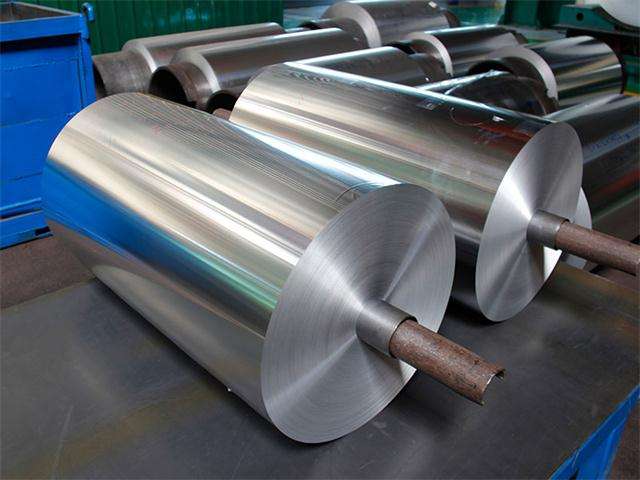
Colored Lacquered Aluminum Foil O Temper is a material in which a colored organic paint layer is sprayed onto the surface of fully annealed (O-state) 鋁箔.
It combines the high thermal conductivity and high barrier properties of aluminum foil with the aesthetic appeal and protective function of a coating.
Commonly used alloys include food-grade 8011 和 8079, as well as pure aluminum alloys such as 1235 和 1050.
Coating resin systems encompass polyester, acrylic, epoxy, polyurethane, and PVDF, supplemented with pigments (such as titanium dioxide and organic pigments) to meet abrasion resistance and weather resistance requirements.
This material is widely used in food and pharmaceutical packaging (例如, 泡罩包裝, easy-tear caps), beverage bottle caps, cosmetic packaging, and decorative packaging.
Furthermore, the barrier organic adhesive layer prevents direct contact between food and metal, avoiding metal migration and odor generation.
Industrially, color-coated aluminum foil is often used in packaging designs that highlight brand image and is required to comply with stringent food contact safety standards (such as FDA 21 CFR 175.300 and EU Regulation 10/2011).

漆漆鋁箔 O 狀態
2. What is Colored Lacquered Aluminum Foil O Temper
Colored lacquered aluminum foil in O temper is a composite material consisting of an aluminum foil substrate in the fully annealed condition, coated with one or more layers of organic lacquer that provide color, protection, and functional properties.
The lacquer system is precisely formulated to adhere strongly to the aluminum surface while withstanding the mechanical deformation required during subsequent converting operations.
2.1 Aluminum Alloys Used for Colored Lacquered Foil
Several aluminum alloys are commonly used as substrates for colored lacquered foil, each offering specific characteristics suited to different applications:
| 合金 | Key Characteristics | Primary Applications |
| 8011 | Good formability, cost-effective, excellent barrier properties | General packaging, lidding foil, pharmaceutical blister |
| 8079 | Superior pinhole resistance, high elongation | Pharmaceutical blister, high-barrier applications |
| 8021 | High strength, excellent barrier | Cold-formable blister, heavy-duty packaging |
| 3003 | Enhanced strength from manganese addition | Cookware, building materials, containers |
| 1235/1050 | High purity, excellent formability | Flexible packaging, decorative applications |
| 1100 | Commercially pure, good workability | General applications, fin stock |
8011 aluminum alloy is the most widely used substrate for colored lacquered foil due to its optimal balance of formability, cost, and performance characteristics.
For pharmaceutical applications requiring maximum pinhole resistance, 8079 合金 with its precisely controlled iron-to-silicon ratio is often specified.
2.2 What Is O Temper Aluminum Foil?
The O temper designation indicates that the aluminum has been fully annealed—heated to a specific temperature and slowly cooled—to achieve its softest, most ductile state.
This thermal treatment eliminates the effects of strain hardening from previous rolling operations, resulting in a completely recrystallized grain structure with equiaxed grains typically ranging from 20-50 μm in size.
Key characteristics of O temper foil include:
- Maximum ductility: Can undergo severe deformation without failure
- Minimal residual stress: Reduces springback after forming
- Uniform grain structure: Ensures consistent mechanical behavior
- Clean surface: Annealing removes rolling oils (when properly controlled)
2.3 Mechanical Properties of O Temper Foil
The mechanical properties of O temper foil vary with alloy and thickness, but generally fall within the following ranges:
| Property | Typical Range | Test Method |
| 抗拉強度 | 60 – 120 百萬帕 (alloy-dependent) | ASTM E8 / 國際標準化組織 6892 |
| 屈服強度 | 30 – 80 百萬帕 | ASTM E8 / 國際標準化組織 6892 |
| 伸長 | 20 – 35% (thickness-dependent) | ASTM E8 / 國際標準化組織 6892 |
| Hardness | 25 – 45 HV | Vickers hardness |
| Modulus of Elasticity | 68 – 70 GPa | — |
The high elongation values—≥20-35%—are particularly significant for deep drawing and forming operations, enabling the production of complex three-dimensional shapes without tearing or excessive thinning.

Huawei 8011 漆漆鋁箔 O 狀態
2.4 Thickness Range and Tolerances
The thickness range of coated aluminum foil is typically 0.006–0.050 mm (6–50 μm).
Very thin foils (例如, 6–15 μm) are mostly used for food sealing films or ultra-fine printing foils; medium thickness (20–30 μm) is used for general packaging caps and heat-sealing films; and thicker foils (30–50 μm) are used for container caps and structural components.
Production tolerances are generally controlled within ±2–5%, with high-quality manufacturers achieving ±2%.
For example, 8011 aluminum foil is available in thicknesses of 0.006–0.20 mm, with a thickness tolerance within ±2% and a roll width tolerance of ±0.1 mm.
It is important to note that the greater the thickness, the thicker the coating needs to be. A design of 8–15 g/m² per side (film thickness approximately 5–15 μm) is typically used.
Coatings that are too thin may result in poor masking, while coatings that are too thick will affect flexibility and cost.
2.5 Why O Temper for Colored Lacquered Foil?
The selection of O temper for colored lacquered foil is driven by several critical requirements:
| Requirement | How O Temper Addresses It |
| Deep drawing capability | High elongation (≥20-35%) enables complex shapes without tearing |
| Embossing and patterning | Soft material conforms to die patterns with high definition |
| Cold forming | Can be mechanically formed without heating |
| Coating integrity | Substrate deformation accommodates coating without cracking |
| Reduced springback | Minimal residual stress maintains formed shape |
| Consistent performance | Uniform grain structure ensures predictable behavior |
For applications such as pharmaceutical blister lidding, food container lids, and decorative embossed foils, the formability provided by O temper is essential for achieving the required geometries while maintaining coating integrity and barrier properties.
3. Coating Chemistry and Properties
The surface coating of Colored Lacquered Aluminum Foil O Temper typically consists of the following types of paints:
Acrylic/Polyester Coatings
These coatings use acrylic or polyester resins as a base and can be formulated using water-based or solvent-based methods.
They offer good weather resistance and strong adhesion, making them a common choice for colored coatings.
Acrylic paints offer vibrant colors and are easy to match, while polyester paints (especially high-temperature resistant types) offer superior scratch resistance and heat resistance.
Typical properties: high mirror gloss, high elongation at break (generally >20%), and long-term colorfastness after UV/damp heat testing.
Epoxy Coatings
Primarily used as a primer to enhance adhesion. Epoxy paints offer high hardness and chemical resistance, but are generally not resistant to UV light; they can be used as a topcoat or in mixed formulations.
Food-grade epoxy resins require special formulations when used in coatings to ensure no toxic residues.
Example: Chalco mentions that epoxy is commonly used as a primer for 8011 foil, and double-sided coating is suitable for beverage caps and blister packs.

Pharmaceutical Packaging Used Lacquered Aluminum Foil
Polyurethane/Polyamide Coatings
Polyurethane (PU) coatings combine flexibility and abrasion resistance, achieving a hard film with high adhesion, and are often used for protective coatings.
Polyamide (PA) coatings offer good impact and pressure resistance and are also used for heavy-duty coatings.
These coatings have a slightly thicker dry film than epoxy or acrylic coatings, further improving scratch and chemical resistance.
PVDF (Polyvinylidene Fluoride) Coatings
Commonly used in colored aluminum panels for building curtain walls, and also for coated foils requiring extremely high weather resistance.
PVDF coatings have excellent weather resistance, UV resistance, and self-cleaning properties, making them suitable for long-term exposure applications.
The disadvantages are higher cost and the need for high-temperature resistant fillers and pigments to match.
Heat-Sealing Coatings (Heat-Sealing Paints)
Generally based on modified acrylic or ester substrates, these coatings can be heat-sealed with polyethylene, polypropylene, and polyester films at certain temperatures.
These thin, tacky coatings are used in aluminum-plastic composite films and aluminum foil covers, bonding firmly to other materials after heat pressing.
Heat-sealing varnishes that meet food/drug safety standards must pass a silicone oil baking test and have strict limits on migration.
Food-grade coatings
For foils used in direct food contact, the coating composition must comply with FDA or EU regulations (例如, free of heavy metals, migratable monomers, ETC。).
For example, commercially available food-grade coatings can meet FDA 21 CFR, BfR XV, and other certification requirements, and do not release toxic substances at high temperatures.
These coatings also need to withstand high-temperature sterilization.
4. Manufacturing Process of Colored Lacquered Aluminum Foil O Temper
4.1 Raw Material Preparation
The manufacturing process begins with high-purity aluminum ingots (typically ≥99.7% Al).
Precise amounts of alloying elements (錳, 鐵, 和) are added to achieve the target composition for the specified alloy (8011, 8079, 3003, ETC。). The molten metal undergoes:
- Degassing: Removal of hydrogen to prevent porosity
- Filtration: Elimination of non-metallic inclusions
- Casting: Production of rolling slabs or continuous casting
4.2 Foil Rolling Process
The rolling process progressively reduces aluminum thickness through multiple stages:
| Stage | Description | 厚度範圍 | Key Controls |
| Hot Rolling | Initial breakdown of cast structure | ~2–6 mm | Temperature control, surface quality |
| Cold Rolling | Progressive thickness reduction | 0.1–0.5 mm | Roll clarity, roughness, rolling oil |
| Intermediate Annealing | Stress relief (as needed) | N/A | Temperature profile, atmosphere |
| Finish Rolling | Final gauge achievement | 6 – 200 μm | Speed, tension, X-ray gauging |
For foil destined for coating, surface quality is particularly critical, as any rolling defects will be visible through the subsequent lacquer layer.
4.3 Annealing for O Temper
Annealing is the critical thermal treatment that achieves the O temper condition:
| Parameter | Typical Specification |
| Annealing Temperature | 250 – 400°C (alloy-dependent) |
| Soak Time | 1 – 24 小時 (batch) / seconds (continuous) |
| Atmosphere | Controlled (空氣, inert gas, or vacuum) |
| Cooling Rate | Slow, controlled to minimize residual stress |
| Grain Size | 20 – 50 μm (equiaxed, recrystallized) |
The annealing process must be carefully controlled to achieve complete recrystallization while maintaining a clean surface for subsequent coating adhesion.
4.4 Surface Preparation for Coating
Proper surface preparation is essential for achieving strong coating adhesion:
| Step | Description | Purpose |
| Degreasing | Alkaline cleaning (2-5%, 50-70°C) | Remove rolling oils and contaminants |
| Rinsing | Multiple stages hot/cold water | Remove cleaning residues |
| Surface Activation | Corona treatment or chemical priming | Enhance surface energy for adhesion |
| Drying | Hot air drying | Remove moisture before coating |
| Cleanliness Verification | Dyne level ≥ 38-42 dynes/cm | Confirm surface readiness |
4.5 Lacquer Application
Lacquer is applied using precision coating techniques:
| Method | Description | Typical Coating Weight | Speed Range |
| Gravure Roll Coating | Precision engraved cylinder | 2 – 15 g/m² | 50 – 400 m/min |
| Reverse Roll Coating | Metered roll application | 3 – 20 g/m² | 50 – 300 m/min |
| Offset Gravure | Indirect application | 2 – 10 g/m² | 50 – 250 m/min |
Process sequence:
- Primer application (if required): Thin layer to promote topcoat adhesion
- Color coating: Application of pigmented lacquer to specified color
- Drying/curing: Multi-zone oven with controlled temperature profile
- Peak metal temperature: 180 – 250°C (resin-dependent)
- Cooling: Before rewinding
4.6 Slitting
After coating, the roll material is air-cooled and leveled, then visually inspected and automatically tested (CCD scanner for paint film defects, thickness gauge for film uniformity, ETC。) before being cut into the final product width (commonly 75mm, 150毫米, and 200mm paper core inner diameter rolls).
Slitting tolerances are typically controlled within ±0.1 mm. The roll material must be wound to prevent loosening and edge skewing, and moisture-proof packaging should be used for storage.
5. Core Advantages of Colored Lacquered Aluminum Foil O Temper
Excellent Formability and Flexibility
The O-state substrate is extremely soft, and combined with a flexible coating, it can withstand repeated mechanical stamping and deep stretching without cracking.
This characteristic makes it easy to create complex shapes such as easy-tear caps and blister foils.
Compared to rigid coatings, the colored coating does not peel when bent, ensuring the coating integrity during the forming process.
Aesthetics and Brand Recognition
Colored coatings give aluminum foil a variety of customizable colors and gloss effects, allowing for metallic, matte, or metallic finishes, greatly enhancing the packaging’s perceived quality.
Compared to a single metallic color, colored packaging more easily highlights the brand image; for example, candy and beverage seals use color to distinguish categories and flavors.
High-quality coated surfaces also facilitate subsequent screen printing or inkjet coding, enhancing information transmission and anti-counterfeiting capabilities.
Barrier Properties
The inherent near-zero permeability of aluminum foil (to moisture, 氧, and ultraviolet light), combined with the sealing effect of the coating, achieves excellent barrier properties.
The coating not only protects the aluminum surface from direct contact with food but also prevents external light and gases from entering, extending the shelf life of food.
For example, in vacuum packaging or modified atmosphere packaging, coated aluminum foil maintains an extremely low oxygen and humidity environment, ensuring freshness.

Colored Lacquered Aluminum Foil for Food Packaging
Corrosion Resistance and Environmental Protection
The coating provides an extra layer of protection for the aluminum foil, isolating it from direct corrosion by corrosive substances such as acids or alkalis.
The coating layer is resistant to humid air, alkaline detergents, and common chemicals, reducing oxidation or corrosion of the aluminum foil substrate.
For food packaging, this means that even if the food has a certain level of acidity or alkalinity, it will not damage the container.
Furthermore, the coating extends the lifespan of the aluminum foil and reduces the risk of environmental corrosion.
Heat-Sealing Properties
By selecting heat-sealing coatings, colored coated aluminum foil can be directly heat-sealed with plastic or paper without the need for an additional film.
For example, heat-sealing foil commonly used in blister packaging and yogurt lids has a coating design that ensures high-strength adhesion at around 200°C.
The heat-sealing varnish on the coating layer forms a strong bond in the sealing area, ensuring reliable packaging sealing.