

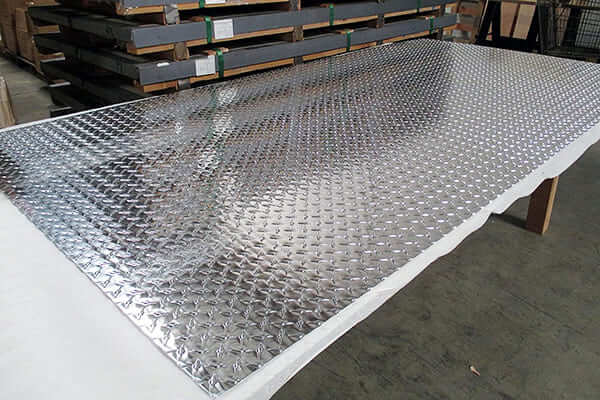
Unleashing Durability: The Versatile Brilliance of 16 Gauge Aluminum Diamond Plate
Aluminum diamond plate has become a staple in industries that demand strength, style, and safety in one package. Among the many options on the market, 16 gauge aluminum diamond plate strikes a compelling balance between durability, gewig, koste, and workability.
This article takes a deep dive into what makes 16 gauge aluminum diamond plate so versatile and effective. You’ll learn how it performs in real-world environments, how it compares to other gauges and materials, where it works best, and what to look for when choosing a supplier—highlighting the capabilities

16 Gauge Aluminum Diamond Plate
Wat is 16 Gauge Aluminum Diamond Plate?
Understanding “16 Gauge”
In metalworking, “gauge” refers to thickness. For aluminum, 16 gauge is approximately:
- Dikte: about 0.063 duim (1.6 mm)
Exact thickness can vary slightly by standard and manufacturer, but this value is widely accepted in North American markets.
In practical terms, 16 gauge aluminum diamond plate is:
- Thick enough to handle moderate loads, daily wear, and occasional impact
- Thin and light enough to be cut, formed, and installed without heavy equipment
It occupies a sweet spot between lightweight utility and heavy-duty resilience.
What Makes It “Diamond Plate”?
“Diamond plate” (also known as tread plate, checker plate, of chequered plate) refers to an aluminum sheet with a raised pattern of diamonds or lines on one side. Hierdie patroon:
- Increases slip resistance
- Adds rigidity without increasing thickness
- Enhances visual appeal, giving a rugged, industrial look
Die verhoogde patroon word gewoonlik tydens produksie in die bord gerol, om 'n permanente tekstuur te vorm.

Aluminium diamantplaat oppervlak vertoon
Tipiese legerings gebruik
Die meeste 16 maat aluminium diamant plaat kom in 'n paar algemene legerings, elk met verskillende sterkpunte:
3003-H22 / H24
- Goeie korrosiebestandheid
- Uitstekende werkbaarheid en vormbaarheid
- Matige krag
- Dikwels gebruik vir dekoratiewe panele, vragmotor gereedskap bokse, binneoppervlaktes
5052-H32
- Hoër sterkte as 3003
- Uitstekende weerstand teen korrosie, veral in mariene en kus omgewings
- Goeie sweisbaarheid
- Ideaal vir bootdokke, mariene trappe, buite voertuig liggame, en industriële vloere
6061-T6
- Baie hoë sterkte
- Goeie bewerkbaarheid
- Laer vormbaarheid (minder geskik vir stywe buiging)
- Word gebruik waar strukturele werkverrigting meer saak maak as vormbaarheid
.
Sleutel Tegniese Eienskappe van 16 Gauge Aluminum Diamond Plate
Fisiese en Meganiese Eienskappe
Terwyl presiese waardes afhang van legering en humeur, 16 gauge aluminum diamond plate typically offers:
| Eiendom | Typical Value (3003-H22) | Typical Value (5052-H32) |
| Dikte | ~1.6 mm (0.063″) | ~1.6 mm (0.063″) |
| Digtheid | ~2.73 g/cm³ | ~2.68 g/cm³ |
| Lewer krag | ~110 MPa (16 ksi) | ~193 MPa (28 ksi) |
| Uiteindelike treksterkte | ~145 MPa (21 ksi) | ~228 MPa (33 ksi) |
| Verlenging by Breek | ~10–20% | ~10–20% |
| Modulus van elastisiteit | ~70 GPa | ~70 GPa |
| Smeltpunt | ~643–654°C | ~607–650°C |
| Koëffisiënt van termiese uitbreiding | ~23.6 µm/m·K | ~23.8 µm/m·K |
These properties translate into a material that can flex slightly under load without cracking, withstand moderate impact, and resist long-term fatigue under everyday use.
Load-Bearing and Structural Behavior
The raised diamond pattern adds stiffness to the plate, especially in bending. Under typical load scenarios:
- A 16 gauge aluminum diamond plate supported at reasonable spans (bv., 300–400 mm) can handle foot traffic in many light-duty applications.
- For heavier loads (bv., pallet jacks, vurkhysers), ingenieurs beweeg dikwels na dikker meters (bv., 0.125″ / 11 meter of meer) of nouer ondersteuningsspasiëring.
Vir gereelde gebruik van voetgangers, 16 meter vaar dikwels goed in:
- Voertuigstappe
- Gereedskapskas deksels
- Vragmotor bed oortreksels
- Ligte mezzanine-paadjies met noue steunspasiëring
Vir industriële vloere, ingenieurs hersien tipies vragtabelle, oorweeg defleksiegrense, en kies die plaatdikte en legering daarvolgens.

Buigtoets van aluminium diamantplaat
Hoekom 16 Maat aluminium diamantplaat staan uit
Optimale balans: Krag vs. Gewig
In vergelyking met dikker plate, 16 peil bied:
- Laer gewig vir makliker hantering en laer brandstofverbruik in vervoertoepassings
- Voldoende krag vir baie werklike gebruiksgevalle
- Laer algehele koste per projek as gevolg van verminderde materiaalverbruik en makliker installasie
Byvoorbeeld, 'n 4′ x 8′ vel van 16 gauge aluminum diamond plate typically weighs around 40–45 lb, while a steel plate with similar strength could weigh more than 100 lb. That difference matters in:
- Vehicle payload capacity
- Fuel economy
- Labor safety during installation
Slip Resistance and Safety
The raised diamond pattern provides enhanced traction, especially when surfaces get wet or oily.
Studies on textured metal surfaces show a reduction in slip incidents when compared with smooth metal, particularly in industrial environments where contaminants are common.
Applications where this matters:
- Truck steps and decks
- Loading dock plates
- Work platforms
- Boat decks and ramps
While no surface is fully “slip-proof,” diamond plate significantly improves friction over flat aluminum sheets or painted steel without texture.
Korrosieweerstand
One of the most important advantages of 16 gauge aluminum diamond plate, especially in 5052 legering, is its resistance to corrosion:
- It forms a thin, stable oxide layer that protects the base metal
- It resists soutsproei better than many steel alloys, even when uncoated
- It performs well in humid, outdoor, and coastal environments
This corrosion resistance reduces:
- Maintenance costs (less repainting, fewer replacements)
- Downtime (less frequent repairs)
- Long-term ownership costs
Estetiese aantrekkingskrag
The iconic look of aluminum diamond plate delivers both function and style:
- Bright metallic sheen
- Industriële, rugged appearance
- Easily cleaned surface (dirt often collects around diamonds but wipes away)
- Can be polished, geanodiseer, or powder coated for custom colors and finishes
Designers use 16 gauge aluminum diamond plate in retail, hospitality, en residensiële kontekste wanneer hulle 'n "tegniese" of "industriële sjiek" gevoel wil hê.

16 Maat aluminium diamantplaat vir vragmotorbeddens
16 Meters vs ander meters en materiale
16 Meters vs dunner meters (bv., 18 of 20 Meter)
Dunner aluminium diamant plate, soos 18 of 20 peil, weeg minder en kos minder per vel, maar hulle het trade-offs.
16 voordele meet:
- Beter duikweerstand
- Minder buigsaamheid onder voetverkeer
- Meer duursaam in voertuig- en toerustingtoepassings
- Meer vergewensgesind onder geringe impak en skuur
Dunner meter voordele:
- Laer koste per vel
- Makliker om met ligte gereedskap te sny
- Geskik vir suiwer dekoratiewe gebruike (muurbekleding, snoei)
Gebruik 16 meet wanneer jy fisiese vragte verwag, nie net estetika nie.
16 Meter vs dikker plate (bv., 0.125″/11 meter)
Dikker diamantplate lewer aansienlik hoër laaivermoë.
Dikker plaat voordele:
- Hoër strukturele sterkte
- Geskik vir vurkhyserverkeer, swaar masjinerie, en hoë-impak omgewings
- Minder vibrasie en weiering
16 voordele meet:
- Laer materiaalkoste
- Makliker hantering en installasie
- Beter vir gewigsensitiewe toepassings soos vragmotors en sleepwaens
Vir swaar industriële vloere en laaibanke, dikker plate maak dikwels sin. Vir vragmotors, trappe, en binne-oppervlaktes, 16 meter tref gewoonlik die sweet spot.
Aluminium diamantplaat vs staal diamantplaat
Staal diamantplaat is nog 'n gewilde keuse, veral in industriële omgewings. Egter, aluminium en staal verskil op belangrike maniere:
| Kenmerk | 16 Gauge Aluminum Diamond Plate | Diamantplaat van staal |
| Digtheid | ~2,7 g/cm³ | ~7,85 g/cm³ |
| Korrosieweerstand | Uitstekend (veral 5052) | Vereis coatings of galvanisering |
| Gewig | Oor 1/3 gewig van staal | Baie swaarder |
| Werkbaarheid | Maklik om te sny en te vorm | Moeiliker om te sny; swaarder om te hanteer |
| Magneties | Nie-magneties | Magneties |
| Oppervlaktevoorkoms | Helder, reflektief | Dowwer tensy gepoleer of bedek |
| Koste per kg | Higher than steel | Lower per kg but heavier per application |
For weight-sensitive and corrosion-critical applications, 16 gauge aluminum diamond plate usually outperforms steel. For extremely heavy loads where weight is less of an issue and budgets are tight, steel may still be preferred.
Common Applications of 16 Gauge Aluminum Diamond Plate
Automotive and Transportation
16 gauge aluminum diamond plate sees extensive use in the automotive and transport sectors:
- Truck Beds and Trailers
- Protective bed liners
- Trailer floors and ramps
- Wheel well covers
- Steps and Running Boards
- Low-profile, high-traction surfaces
- Lightweight compared to steel alternatives
- Tool Boxes and Storage
- Weather-resistant, lockable storage boxes
- Side and underbody truck tool boxes
Fleet operators often choose 16 gauge for its combination of durability and fuel savings over the vehicle’s life.

Container Used Aluminum Diamond Plate
Industrial and Commercial Facilities
Manufacturing plants, warehouses, and commercial buildings use 16 gauge diamond plate in multiple ways:
- Machine platforms and access steps
- Protective guards around equipment
- Floor overlays in high-traffic walking zones
- Kick plates and wall protection in loading areas
Its resistance to corrosion and wear reduces long-term maintenance efforts, especially in environments with moisture, olies, or cleaning chemicals.
Marine and Coastal Environments
Aluminum diamond plate, particularly in 5052 legering, performs well in marine settings:
- Boat decks and steps
- Dock surfaces and gangways
- Marina ramps and access platforms
The combination of non-slip texture en saltwater resistance makes it a strong choice where steel would rust quickly and need aggressive protection.
Architectural and Interior Design
Beyond purely functional roles, 16 gauge aluminum diamond plate appears in architecture and interior design:
- Wall panels in garages, workshops, and retail stores
- Counter fronts and bar faces
- Elevator cab interiors
- Decorative trims and corner guards
Designers often use it when they want a robust surface that also makes a visual statement.
Residential and DIY Projects
Homeowners and DIY enthusiasts use 16 gauge aluminum diamond plate for:
- Garage wall panels and backsplashes
- Workbench surfaces and tool cabinet skins
- Stair treads and porch steps
- Utility trailer upgrades
Its ease of cutting and drilling means many projects remain accessible using basic tools, especially in thinner sheets and with proper safety practices.
Choosing the Right Alloy and Finish
Alloy Selection: Matching Performance to Environment
3003
- Ideal for indoor use, dekoratiewe panele, and moderate-duty applications
- Good balance of cost, vormbaarheid, en weerstand teen korrosie
5052
- Best for outdoor, mariene, or high-corrosion environments
- Stronger than 3003, better for structural or semi-structural roles
- Suitable for trailer floors, boat decks, outdoor steps
6061
- Used when high structural strength is paramount
- Less formable; better for flat panels than intricate bends
- Requires more care when forming to prevent cracking
Surface Finish Options
Mill Finish
- Uncoated, slightly matte or semi-reflective surface
- Economical and widely used
- May show rolling marks or minor scratches
Polished Finish
- Highly reflective, almost mirror-like
- Ideal for decorative and display applications
- Requires more care to maintain appearance
Anodized Finish
- Electrochemical process that thickens the oxide layer
- Enhances corrosion resistance and hardness
- Can be color-anodized (swart, brons, ens.)
Powder Coated or Painted
- Adds color and extra protection
- Improves scratch resistance
- Used for branding, visibility, or to match design schemes
Thickness and Pattern Considerations
Even within “diamond plate,” pattern size and distribution vary:
- Standard diamond pattern
- Most common; suitable for general use
- Larger or smaller diamonds
- Larger diamonds can increase traction and visual impact
- Smaller patterns may clean more easily and look more refined
Additionally, some users specify flat-back vs pattern-back sheets depending on whether they need a completely flat underside for secure bonding to substrates.
FAQs
1. How thick is 16 gauge aluminum diamond plate?
For aluminum, 16 gauge is approximately 0.063 duim (1.6 mm) thick. This is a widely used thickness for light to medium-duty applications such as truck steps, tool boxes, and interior floor overlays.
2. Is 16 gauge aluminum diamond plate strong enough for truck beds?
For light-duty and medium-duty trucks, 16 gauge aluminum diamond plate often works well as a bed liner or overlay. For heavy loads or concentrated point loads (bv., swaar masjinerie), some users choose a thicker plate (such as 0.100″–0.125″) or add more structural support beneath the plate. Always evaluate load requirements and consult with the supplier or a structural engineer if in doubt.
3. Does aluminum diamond plate rust?
Aluminum does not rust like carbon steel. Instead, it forms a thin oxide layer that protects against further corrosion. In highly corrosive environments (like saltwater exposure), choosing an alloy such as 5052 and following good design practices (drainage, avoiding trapped moisture, minimizing galvanic contact with incompatible metals) further enhances longevity.
4. Kan ek sweis 16 gauge aluminum diamond plate?
Ja, 16 gauge aluminum diamond plate can be welded. Common methods include EK en TIG sweiswerk. Alloy choice affects weldability:
- 3003 en 5052 weld easily
- 6061 requires more care and may need post-weld heat treatment for optimal strength
Use compatible filler rods and follow welding best practices to maintain strength and appearance.
5. Can aluminum diamond plate be painted or powder coated?
Ja. Aluminum diamond plate can be:
- Painted after proper surface preparation (degreasing, light abrasion, onderlaag)
- Powder coated, which provides a durable, uniform finish
Powder coating is widely used when color, branding, or additional surface protection are required.
6. Is 16 gauge or 1/8″ diamond plate better for stairs?
- 16 peil (0.063″) works for light-duty stairs and residential use with appropriate support.
- 1/8″ (0.125″) diamond plate is more robust and preferred for commercial or industrial stairs with heavy traffic.
The choice depends on expected load, span, safety requirements, and applicable building codes.
Gevolgtrekking
16 gauge aluminum diamond plate delivers an effective blend of durability, light weight, slip resistance, and visual appeal. It fits into a wide spectrum of applications—from truck beds and stairs to boat decks, factory floors, and architectural accents.
Key advantages include:
- Strong enough for many real-world loads without unnecessary weight
- Uitstekende weerstand teen korrosie, especially in alloys like 5052
- Enhanced safety due to textured, non-slip surface
- Long service life and low maintenance, keeping lifecycle costs under control