

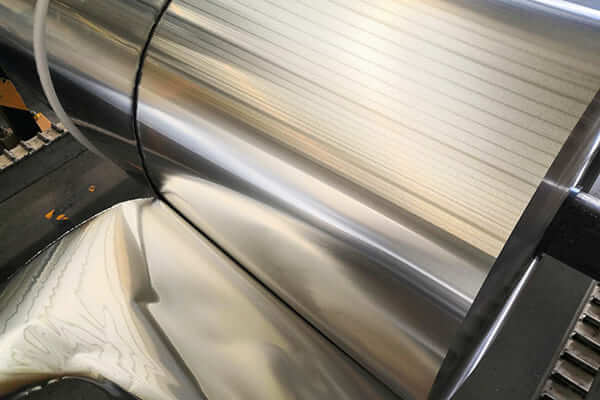
1. Introduction
High Barrier Coated Aluminum Foil 30 µm, stands as a technological pinnacle in protective packaging, critically safeguarding sensitive products across a multitude of industries.
This material masterfully combines aluminum’s inherent, near-absolute barrier against gases, moisture, light, and aroma with sophisticated, engineered coatings.
These coatings are not merely superficial additions; they fundamentally enhance the foil’s performance by sealing microscopic imperfections (pinholes), imparting advanced functionalities such as superior heat seal integrity, precise peelability, and robust chemical resistance, and further augmenting its barrier profile against specific permeants.
The 30 µm thickness is a meticulously chosen parameter, representing an optimal equilibrium between material resource efficiency, mechanical flexibility, cost-effectiveness, and the uncompromised delivery of an extremely high barrier.
Its strategic deployment is therefore indispensable in sectors ranging from pharmaceuticals and advanced food systems to high-value cosmetics and demanding industrial applications.
This article offers an exhaustive, multi-faceted exploration of its intricate composition, critical properties, advanced manufacturing methodologies, stringent testing and validation protocols, diverse application landscapes, and its strategic competitive positioning, positioning it as an essential reference for technical experts, R&D specialists, and procurement strategists alike.

High barrier coated aluminum foil 30 µm huawei
2. What Is “High Barrier Coated Aluminum Foil 30 µm”?
2.1 Product Definition
High Barrier Coated Aluminum Foil 30 µm refers to a flexible packaging material comprising a base layer of aluminum foil, precisely 30 micrometers (µm) thick, which has been uniformly coated with one or more layers of high-performance polymers or inorganic compounds.
The primary purpose of these coatings is to augment the aluminum’s already excellent barrier properties, impart new functionalities (e.g., heat sealability, chemical resistance), and mitigate potential microscopic defects like pinholes that can occur during foil production or subsequent handling, thus ensuring a “high barrier” performance against external permeants.
2.2 Common Alloys
For high barrier coated aluminum foil 30 μm, alloy selection typically balances four priorities: pinhole risk control, strength/stiffness, formability in converting, and corrosion/media compatibility.
Below are commonly used specific grades and their typical positioning (final suitability still depends on the supplier’s rolling process capability and the agreed quality level).
- 1050 / 1050A: A representative high‑purity grade with good ductility and uniform surface, often used where coating appearance and converting stability are important.
- 1060 aluminum foil: Offers excellent purity and formability; commonly used when a stable coating/lamination base is needed and strength demand is moderate.
- 1070: Higher purity supports better ductility and thermal/electrical conductivity; suitable when surface consistency and “soft” converting behavior are prioritized, though strength is relatively low.
- 1100: A classic commercial‑purity grade with good overall workability; often used as a general‑purpose foil substrate with a mature supply base.
- 8011 aluminum foil: One of the most widely used packaging‑foil grades, balancing strength and processability; commonly used in general high‑barrier laminate structures.
- 8021: Frequently used for packaging where pinhole and barrier reliability are more critical; typically valued for balancing strength with stable deep‑converting performance (dependent on foil mill quality level).
- 8079 aluminum foil: Used in many higher‑requirement flexible packaging and some pharma packaging; often chosen to emphasize low pinhole tendency, stable lamination, and consistent appearance.
- 3003: A typical Al–Mn alloy; generally higher strength than 1xxx and better resistance to deformation, suitable when stiffness and crease resistance are needed in coated‑foil constructions.
- 3004: Higher strength than 3003 (with a different composition balance); used when structural support, dent resistance, and web rigidity are prioritized, with attention to forming window and lamination compatibility.
- 5052 aluminum foil: Strong corrosion resistance and good strength; suitable for more industrial or corrosive environments. Typically requires stricter validation of coating adhesion and long‑term interfacial stability in coated/laminated systems.
- 5083: Higher‑Mg alloy with higher strength and corrosion resistance, more common in plate/sheet applications. If used in foil systems, it is often a special/custom route, with cost and availability to be evaluated.
2.3 Typical laminate structures
Below is a practical map of how 30 μm coated foil is used inside laminates (examples are generic).
| Structure (example) | Where 30 μm foil sits | Why coating matters | Typical use |
| PET / Adhesive / Al 30 / PE | Middle barrier layer | Adhesive anchorage; corrosion protection; bond durability | Pouches, sachets |
| Printed PET / Adhesive / Al 30 (coated) / CPP | Middle barrier layer | Print-side durability + bond retention under heat | Retort-like or hot-fill variants (system-dependent) |
| Paper / Al 30 (coated) / PE | Barrier + stiffness | Lacquer for product-side protection; PE for sealing | Food wraps, lidding (design-dependent) |
| Al 30 (heat-seal coated) (single web) | Foil is the web | Direct sealability + scuff resistance | Specialty closures, liners |
3. Why Choose 30 µm Aluminum Foil?
The selection of 30 µm thickness for high barrier coated aluminum foil is a deliberate engineering choice that optimizes a critical balance of performance, cost, and processability:
- Barrier Efficacy: At 30 µm, aluminum foil inherently provides an excellent barrier to gases, moisture, and light. Thinner foils (e.g., 6-9 µm) are more susceptible to pinholing and flex cracking, which can compromise barrier integrity, especially in dynamic applications. While thicker foils (e.g., 40-50 µm) offer marginally better intrinsic barrier, the incremental gain is often outweighed by increased material cost and reduced flexibility.
- Mechanical Integrity: 30 µm foil offers robust mechanical strength for most packaging operations, including forming (e.g., blister packs), handling, and resistance to minor punctures during transportation. It maintains sufficient stiffness without being overly rigid.
- Flexibility and Formability: This thickness retains good flexibility, which is crucial for applications like blister packaging, sachets, and pouches that require creasing, folding, and thermoforming without excessive stress cracking or pinholing.
- Material Efficiency and Cost: 30 µm represents a sweet spot where high barrier performance is achieved with optimized material consumption, balancing cost-effectiveness with performance. Using significantly thicker foil incurs higher raw material and shipping costs without proportional barrier benefits, while thinner foils might require more extensive (and costly) coating solutions to compensate for reduced intrinsic barrier.
- Processing Compatibility: It is a commonly processed gauge for various converting equipment, ensuring efficient lamination, printing, and sealing.

30 µm aluminum foil Thickness test
4. Properties of High Barrier Coated Aluminum Foil 30 µm
The synergistic combination of 30 µm aluminum foil and advanced coatings results in a material with exceptional properties.
4.1 Barrier Properties
These are the primary drivers for selecting high barrier coated aluminum foil.
Coatings specifically target reducing permeation rates through potential pinholes or micro-cracks in the base foil.
- Water Vapor Transmission Rate (WVTR): high barrier coated aluminum foil 30 um exhibits extremely low WVTR, often in the range of <0.005 g/m²/day at 38°C, 90% RH. This is critical for moisture-sensitive products like pharmaceuticals, active ingredients, and dried foods.
- Oxygen Transmission Rate (OTR): Similarly, OTR values are exceptionally low, typically <0.005 cm³/m²/day at 23°C, 0% RH. This protects oxygen-sensitive products from oxidation, maintaining flavor, color, and efficacy.
- Light Barrier: Aluminum foil inherently provides a 100% barrier to UV, visible, and IR light, protecting light-sensitive contents from degradation. The coating does not diminish this.
- Aroma and Flavor Barrier: The dense structure of aluminum combined with the coating prevents the ingress or egress of volatile aromatic compounds, preserving product integrity and preventing flavor cross-contamination.
4.2 Mechanical Properties
The 30 µm base foil provides a robust foundation for mechanical performance.
- Tensile Strength: Typically ranges from 80-120 N/mm² (depending on alloy and temper), providing good resistance to stretching and tearing during processing and end-use.
- Elongation at Break: Around 3-8%, offering sufficient flexibility for forming operations without immediate fracture.
- Puncture Resistance: While coatings add a layer of protection, the 30 µm thickness contributes significantly to resistance against minor punctures, enhancing the overall packaging robustness.
- Flex Crack Resistance: Coatings, especially more ductile polymeric ones, can enhance the foil’s resistance to flex cracking during repeated bending, which is vital for consumer-use products.
4.3 Thermal Properties
- Temperature Resistance: Aluminum foil itself is stable across a wide temperature range (-70°C to 200°C+). The limiting factor becomes the coating and sealant layers, which are typically stable between -40°C to 120°C for common polymers, allowing for retort sterilization, freezing, and warm filling applications.
- Heat Conductivity: Aluminum is an excellent heat conductor. This property facilitates rapid heating or cooling of packaged products, which can be advantageous in some food processing applications (e.g., retort).
4.4 Adhesion and Lamination Strength
High barrier performance relies heavily on the secure bonding between layers in a laminate structure and the adhesion of the coating to the foil.
- Coating Adhesion: Specialized primers and optimized coating chemistries ensure strong adhesion of the barrier coating to the aluminum surface, preventing delamination and maintaining barrier integrity. Typical dry peel adhesion values (e.g., 180° peel test) can be >1.5 N/15mm.
- Lamination Strength: When integrated into laminates, the peel strength between the coated foil and adjacent layers must be robust, often exceeding 2.0 N/15mm to withstand stresses during converting and end-use.
4.5 Heat Seal Strength
For many applications (e.g., sachets, pouches, blister lidding), the coating on one side of the 30 µm foil serves as the heat-seal layer.
- Seal Integrity: The coating is engineered to form a strong, hermetic seal at specified temperatures and pressures, preventing product leakage and external contamination. Typical heat seal strength (e.g., peelable seals) for pharmaceutical blister lidding can range from 7-12 N/15mm, while aggressive seals for food pouches might be >15 N/15mm.
- Sealability Window: A broad sealing window is desirable to accommodate variations in packaging equipment.

Food Packaging Bags Aluminum Foil
5. Manufacturing Process of High Barrier Coated Aluminum Foil 30 µm
The production of high barrier coated aluminum foil is a multi-stage, precision-intensive process:
5.1 Base Foil Production (Rolling & Annealing)
- Hot Rolling: Aluminum ingots are hot-rolled into thick sheets.
- Cold Rolling: These sheets are then cold-rolled through a series of highly polished rolls to progressively reduce thickness. Achieving a uniform 30 µm thickness requires extremely tight process control.
- Annealing: The foil undergoes annealing (heat treatment) in a controlled atmosphere furnace to achieve the desired temper (e.g., soft temper O) and mechanical properties, improving ductility and reducing residual stress. This also cleans the surface of rolling oils.
5.2 Surface Preparation
After annealing, the foil surface is crucial for coating adhesion.
- Cleaning: Further cleaning processes (e.g., aqueous cleaning, solvent washing, or plasma treatment) remove any remaining contaminants, oils, or oxides, creating a clean, receptive surface for the coating.
- Pre-treatment (Priming): Often, a thin primer layer (e.g., chromate-free, silane-based) is applied to enhance coating adhesion and improve corrosion resistance.
5.3 Coating Application
This is the critical step for imparting high barrier properties and functional layers.
- Coating Methods:
- Gravure Coating: Precise application of thin, consistent coating layers using an engraved roller. Ideal for barrier coatings.
- Flexographic Coating: Uses a flexible relief plate for coating application, suitable for certain lacquers and primers.
- Extrusion Coating/Lamination: For applying thicker polymeric layers (e.g., polyethylene for heat sealing) directly onto the foil or as an adhesive in a lamination process.
- Drying/Curing: After coating, the foil passes through drying ovens to evaporate solvents (for solvent-based coatings) or cure the coating (for UV/EB curable systems), forming a solid, cohesive layer.
- In-line Quality Control: Sensors and cameras continuously monitor coating thickness, uniformity, and defect presence.
5.4 Slitting, Winding & Packaging
- Slitting: The wide rolls of coated foil are precision-slit into narrower widths according to customer specifications.
- Winding: The slit coils are wound onto core materials (e.g., cardboard, plastic) under controlled tension to ensure uniform, stable rolls.
- Packaging: The finished rolls are carefully packaged to protect them from physical damage and environmental factors during storage and transportation.

Manufacturing Process of High Barrier Coated Aluminum Foil 30 µm